

Most owners learn how to respond to Google reviews the hard way. A one star review lands on a Friday night, they type an angry reply from their phone, and that reply sits under their name for years.
Here is the thing nobody tells you. The review is not the most important part. Your reply is. The person who wrote the review already made up their mind. The fifty people reading it next week have not. This post gives you a simple system for every kind of review: the happy ones, the angry ones and the ones that should not exist at all.
Table of Contents
Quick Answer
To learn how to respond to google reviews, follow one rule: reply to every review, good and bad, within a few days. Thank happy customers by name and mention the specific service. For negative reviews, stay calm, own what went wrong, explain the fix and move the details offline. For fake or abusive reviews, reply briefly, then flag them through Google’s official reporting process instead of arguing in public.
According to BrightLocal’s 2024 survey, 88% of consumers would use a business that replies to all of its reviews, compared to 47% for a business that does not reply at all. That gap is the whole argument.
Why Your Replies Matter More Than the Review
Your customers are not just reading your reviews. They are reading how you handle them. A calm reply to a bad review tells a stranger more about you than ten five star ratings.
The numbers back this up. According to BrightLocal’s Local Consumer Review Survey 2024, 93% of consumers expect a business to respond to their reviews. And 88% would use a business that replies to all of its reviews, while only 47% would use one that ignores them.
The 2025 edition of the same survey, published in January 2025, found that just 7% of consumers say they do not expect a response at all. Expectation is now the default. Silence reads as “nobody here cares.”
Notice the word all. BrightLocal found again in 2025 that businesses replying to every type of feedback do far better than businesses that only answer the positive ones or only answer the complaints. Replying only to the angry reviews looks like damage control. Replying only to the happy ones looks like you are hiding something.
Speed matters too. In the 2025 survey, 63% of consumers expected a response somewhere between two to three days and a week. So here is a simple standard you can actually hit: every review gets a reply within 48 hours on business days. Negative reviews get looked at the same day.
How to Reply to a Negative Google Review
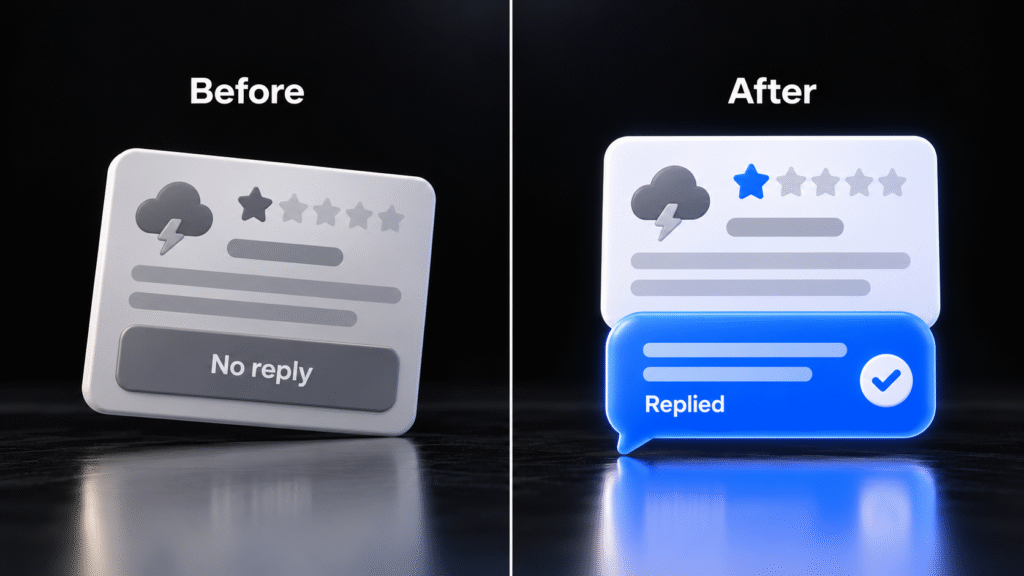
This is where most owners lose. Not because they are bad at business, but because they reply while they are still angry. Rule one: never reply in the first hour. Read it, walk away, then come back.
A good negative review reply has four parts. Keep it under about 100 words.
- Thank them and use their name. It feels backwards. Do it anyway. It shows every reader you are not defensive.
- Own the part that is true. If the tech was late, say the tech was late. Do not explain your staffing problems. Nobody reading cares.
- Say what you changed or what you will do. Something specific: “We added a call ahead text so this does not happen again.” Vague promises read as fake.
- Move it offline. Give a name and a direct phone number or email. The goal is to solve it in private, not win the argument in public.
And here is what not to do:
- Do not argue facts line by line. Even if you are right, you look petty.
- Do not reveal private details. If you run a dental office, clinic or med spa, do not confirm the person is a patient or mention any treatment. Health privacy rules apply to review replies too.
- Do not offer a discount or freebie in exchange for changing or removing the review. Google’s Maps content policy prohibits incentives for revising or removing a negative review.
- Do not copy and paste the same apology on every complaint. Readers notice.
One mindset shift. You are not writing to the reviewer. You are writing to the next customer comparing you with two competitors.
If you fix the problem, some customers update their review on their own. Great when it happens. Just never make the fix conditional on it.
How to Respond to Google Reviews by Star Rating
Different reviews need different replies. Here is a simple playbook you can hand to whoever on your team handles reviews.
| Review type | Reply within | What to say | What to avoid |
|---|---|---|---|
| 5 stars with text | 48 hours | Thank them by name, mention the specific service, invite them back | Generic “Thanks for the review!” on every reply |
| 5 stars, no text | 48 hours | One short line of thanks | Skipping it. Every review gets a reply |
| 4 stars | 48 hours | Thank them, ask what would have made it a 5 | Getting defensive about the missing star |
| 3 stars (mixed) | 24 hours | Thank them, own the weak spot, explain the fix | Only answering the nice part |
| 1 to 2 stars (real customer) | Same day review, reply within 24 hours | Name, ownership, the fix, a direct contact | Arguing, private details, offering incentives |
| Suspected fake or abusive | Reply within 24 hours, then flag | A short, calm note that you cannot find them in your records | Accusations, insults, threats |
Positive reviews deserve more effort than most owners give them. A happy customer who reads a real reply is more likely to come back and to refer. And the reply is free advertising. When a future customer reads “Glad the same day water heater install went smoothly, Maria,” they learn what you do, how fast you do it and that a real person runs the place.
Can you use AI to draft replies? Yes, with care. In BrightLocal’s 2024 blind test, 58% of consumers preferred the AI written review response over the one a business owner wrote, and the 2025 repeat with a vet clinic came out almost the same. Use it as a first draft. Then add the detail only you know: the name, the job, the tech who did it.
Google Review Reply Templates You Can Adapt
These are templates, not scripts. Swap in the real name, the real service and the real person. If a reply could be posted under any business in America, it is too generic.
- 5 stars: “Thanks, [Name]. So glad the [specific service] went smoothly and that [team member] took good care of you. See you next time.”
- 5 stars, no text: “Thank you for the five stars, [Name]. We appreciate you choosing us.”
- 4 stars: “Thanks, [Name]. Happy you liked the [service]. If there is one thing we could have done better, I would love to hear it at [email].”
- 3 stars: “Thanks for the honest feedback, [Name]. You are right that [issue]. We have [specific change]. I would like to make it right, call me directly at [phone].”
- 1 star, real customer: “[Name], I am sorry. [Issue] is not the standard we hold ourselves to. We have [specific fix]. Please call me at [phone] so I can sort this out personally. [Your name], owner.”
- 1 star, no record of the person: “Hi [Name], we take every review seriously, but we cannot find a visit or job under this name. If we served you, please contact us at [phone] so we can look into it.”
Sign the negative replies with a real first name and the word owner or manager. It turns a faceless business into a person who answers for the work.
What to Do About Fake or Policy-Violating Reviews
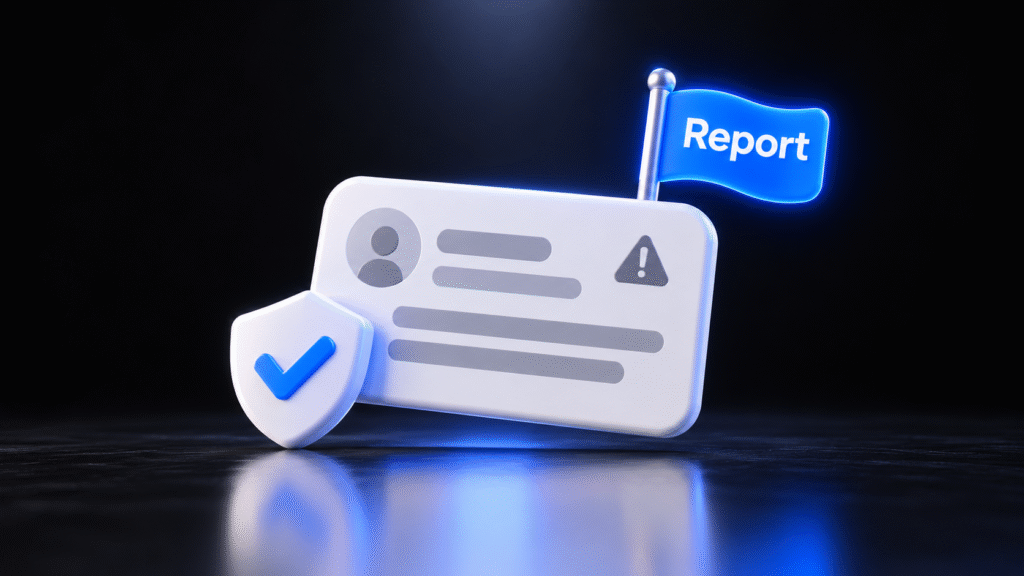
First, a hard truth. Google will not remove a review because it is unfair, harsh or wrong about the details. Google’s help center says it directly: do not report a review just because you disagree with it. Only reviews that break Google’s policies are eligible for removal.
Under Google’s Maps user contributed content policy, that includes:
- Fake engagement: reviews not based on a real experience, paid reviews, or one person posting from multiple accounts.
- Conflict of interest: reviews from current or former employees, competitors reviewing you, or people with a business relationship to you.
- Harassment, hate speech and offensive content.
- Personal information: a review that posts private details about you or your staff.
- Off topic, spam or advertising content.
If a review fits, here is the official process. From your Business Profile, open your reviews, select the report option next to the review, choose the reason and send it. You can also use Google’s Reviews Management Tool, which lets you report reviews for removal and check the status of past reports. Statuses include Decision pending, Report reviewed with no policy violation, and Escalated. If Google decides the review does not break policy, you get one appeal, and you can include up to 10 eligible reviews in it.
Expect it to take days, not hours. While you wait, post a short, calm reply. Readers see it immediately, and the report may take a while.
There is one special case. If someone contacts you demanding money to remove a wave of one star reviews, that is an extortion scam. As Search Engine Land reported in November 2025, Google now has a dedicated report form for it. Google’s advice: do not engage or pay, gather evidence right away (screenshots showing the date, time and sender), link every suspicious review, and submit everything through the form.
The FTC Rules on Fake Reviews Cut Both Ways
Fake reviews are not just a Google policy problem anymore. On August 14, 2024, the FTC announced a final rule banning fake reviews and testimonials. It took effect on October 21, 2024.
The rule covers things local businesses actually do. It bans buying reviews, posting reviews from people who never used your business, and paying or rewarding customers for reviews that say something positive (or negative). It requires disclosure when insiders such as managers or employees leave reviews. And it bans review suppression, like using baseless legal threats or intimidation to get a negative review taken down.
The FTC means it. On December 22, 2025, FTC staff sent warning letters to ten companies about possible violations of the rule, according to a summary by the law firm Kelley Drye. The rule lets the FTC seek civil penalties of up to $53,088 per violation against knowing violators.
Google’s own policy adds two more rules owners break all the time. You cannot discourage negative reviews, and you cannot selectively ask only your happy customers for reviews. So if your review request process screens people first (“Were you happy? Click here for Google. Unhappy? Click here to tell us privately”), stop. Ask everyone the same way.
A Google Review Checklist You Can Run This Week
No theory. Just the moves, in order.
- Reply to every unanswered review, oldest first. Yes, the ones from two years ago too.
- Pick one owner for reviews. One person, one 48 hour standard, one backup when they are out.
- Turn on review notifications so new reviews reach that person’s phone the same day.
- Save the six templates above in a shared doc, then personalize every single use.
- Write your two sentence privacy rule for healthcare or legal clients: never confirm a client relationship in public.
- Audit your review requests. Same ask for every customer, no rewards, no screening.
- Flag clear policy violations through Google’s Reviews Management Tool and write down the date you reported each one.
- Add reviews to your weekly profile routine. We laid out a full weekly routine in our Google Business Profile optimization guide.
Do the first three this week. They take a couple of hours and they fix the thing customers notice most: silence.
Where BizWarrior Fits
BizWarrior is a young agency that helps local businesses get more clients with software and marketing that sell. For reviews, that usually means setting up a simple request routine your team will actually run, writing reply guidelines in your voice, and keeping your Google Business Profile active every week.
Reviews are only one piece. Many bad reviews start with a missed call or a confusing booking page. Our custom AI receptionist is built to answer the calls your team misses, and a conversion focused website helps make sure the customers your reviews attract can book without friction. You can see everything we do here.
Not sure where your review process is leaking? Talk to us. We will look at your profile with you and tell you plainly what to fix first.
Frequently Asked Questions
Should I respond to every Google review?
Yes. According to BrightLocal’s 2024 survey, 88% of consumers would use a business that replies to all of its reviews, compared to 47% for a business that does not reply. The 2025 edition found only 7% of consumers do not expect a response. Replying to both positive and negative reviews shows you are listening, not just doing damage control.
How quickly should I respond to a Google review?
Aim for 48 hours on business days for every review, and look at negative reviews the same day. In BrightLocal’s 2025 survey, 63% of consumers expected a response somewhere between two to three days and a week. Replying faster than that puts you ahead of most competitors and catches problems before they grow.
What should I say in a reply to a bad Google review?
Thank the reviewer by name, own the part that is true, explain what you changed or will do, and give a direct phone number or email to continue privately. Keep it short and calm. Never argue details, reveal private information or offer a reward for changing the review. Write for the future customers reading it.
Can I get a bad Google review removed?
Only if it breaks Google’s policies, such as fake engagement, conflict of interest, harassment, personal information or spam. Google will not remove a review because you disagree with it. Report it from your Business Profile or through the Reviews Management Tool, then check its status there. If Google finds no violation, you can file one appeal.
What should I do if someone threatens bad reviews unless I pay?
Do not pay and do not engage. That is an extortion scam. Google has a dedicated report form for negative review extortion. Gather evidence right away, including screenshots showing the date, time and sender, link every suspicious review, and submit it all through the form. Then post short, calm replies to the reviews while Google investigates.
Is it legal to offer customers a discount for leaving a review?
Be very careful. The FTC rule that took effect October 21, 2024, bans rewards tied to reviews that express a particular sentiment, and Google’s policy prohibits incentives for reviews at all. It also prohibits asking only happy customers. The safe approach is to ask every customer the same way, with no reward attached.
Can I use AI to write my Google review replies?
Yes, as a first draft. In BrightLocal’s 2024 blind test, 58% of consumers preferred an AI written review response, and the 2025 repeat came out almost the same. Always edit the draft to add the customer’s name, the specific service and a real person’s signature, and never post the same reply twice.
Sources
- BrightLocal, Local Consumer Review Survey 2025 (January 29, 2025): https://www.brightlocal.com/research/local-consumer-review-survey-2025/
- BrightLocal, Local Consumer Review Survey 2024 (March 6, 2024): https://www.brightlocal.com/research/local-consumer-review-survey-2024/
- Google Business Profile Help, Report inappropriate reviews on your Business Profile: https://support.google.com/business/answer/4596773
- Google Maps Help, Maps user contributed content policy: prohibited and restricted content: https://support.google.com/contributionpolicy/answer/7400114
- Federal Trade Commission, Federal Trade Commission Announces Final Rule Banning Fake Reviews and Testimonials (August 14, 2024): https://www.ftc.gov/news-events/news/press-releases/2024/08/federal-trade-commission-announces-final-rule-banning-fake-reviews-testimonials
- Kelley Drye, FTC Warns Companies of Potential Violations of the Consumer Review Rule (December 28, 2025): https://www.kelleydrye.com/viewpoints/blogs/ad-law-access/ftc-warns-companies-of-potential-violations-of-the-consumer-review-rule
- Search Engine Land, With negative review extortion scams on the rise, use Google’s report form (November 11, 2025): https://searchengineland.com/with-negative-review-extortion-scams-on-the-rise-use-googles-report-form-464515